

Ninety years ago, the Spanish civil war pitted an elected popular front government against Franco’s fascist forces actively supported by Hitler and Mussolini. Take a look at Picasso’s famous painting of the Nazi bombing of Guernica now displayed at the UN.
Left-wingers urgently pressed the UK’s Conservative Government to arm the Spanish government and volunteers from around the world rushed to defend democracy. Labour also abandoned its initial support for non-intervention. This glorious (and complex) resistance to fascism is widely celebrated on the left.
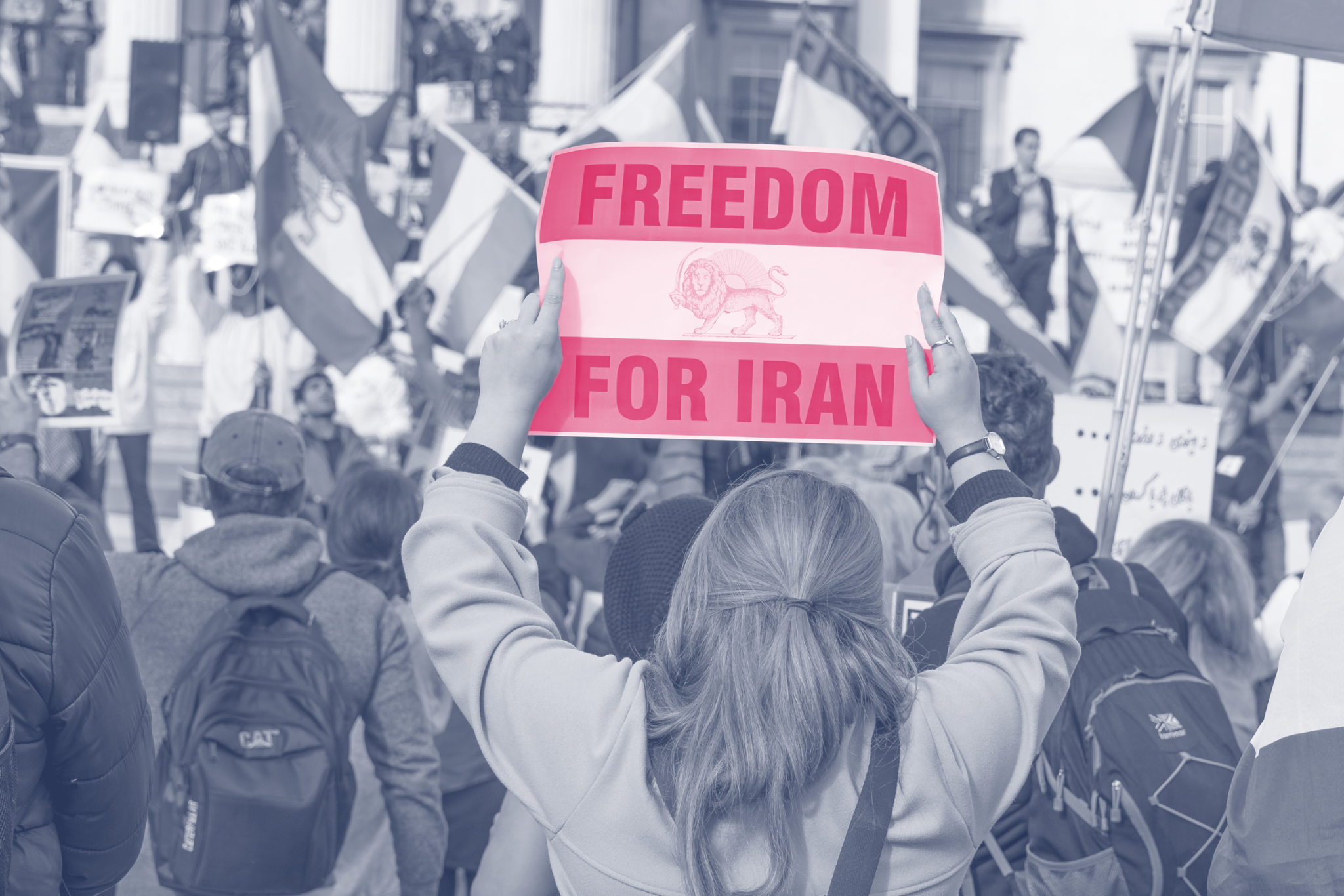
But some on the hard left now clutch their pearls and pooh-pooh Iranian pleas for assistance against a fascist clerical regime that machine guns protestors in public squares. The death toll may have reached 23,000 with many more injured and maimed – some cruelly blinded or shot in the genitals – or in jail. No-one is sure because the regime has closed the Internet. Mass murder has gone dark apart from the regime’s shots of morgues full of dead bodies to send a signal.
Comedian Omid Djalili has become a serious and searing voice mocking inaction in the face of a misogynist, antisemitic, and anti-gay regime. He quips that expecting behavioural change from the regime through sanctions is like being attacked by zombies and then politely asking them to consider veganism.
Some leftists are sitting on their hands in pious indifference to Iranians and a growing wave of support among young people. Jeremy Corbyn conceded in the Commons that Iranian lives should be mourned as, he added, should Palestinian lives. He could have mentioned the huge toll of lost lives in Syria, Israel, and Ukraine in which Iran was and is complicit. Corbyn was once paid as a host for the regime’s propaganda arm, Press TV.
Corbyn asserted that external regime change attempts in Iran “are very unlikely to work and will actually create a much worse situation.” His frenemy Zarah Sultana argued that “only the Iranian people have the right to decide their own future. No outside power should dictate or interfere.”
They both ignore Iranians urging intervention. Many were wary of this in previous uprisings because it could rally people to the flag but my contacts say that this is now less likely and they need help to beat the regime once and for all.
Marxist writer Sirantos Fotopolous’ open letter to the anti-imperialist left condemns its brittle, lazy, and morally bankrupt politics. He concludes that “If you genuinely oppose genocide, authoritarianism, and oppression in all their forms, then abandon the childish comfort of ‘the enemy of my enemy is my friend.’ That slogan is not analysis; it is abdication. It sacrifices principle for alignment, coherence for convenience, and real human beings for the illusion of geopolitical clarity. A Left that cannot stand with the oppressed has already forfeited its claim to emancipation.” Let’s hope we are seeing the ignominious demise of deeply superficial and flawed thinking on a dwindling part of the left that contradicts internationalism and universal human rights.
The reality is that America is the main source of external military help. Others can help. Of course, Trump is an awkward figure and western interventions sometimes fail and sometimes succeed. Action and inaction both have costs, as we saw in Syria in 2014 and the subsequent loss of hundreds of thousands of lives.
A positive precedent was Iraqi Kurdistan in 1991. Its uprising against Saddam Hussein liberated cities but Saddam’s air power forced up to two million Kurds into the freezing mountains where up to 1,000 people were dying daily.
John Major’s novel and popular policy of providing with America and France a safe haven and no-fly zone for 12 years for Iraqi Kurdistan was requested by Kurdish leaders and allowed Kurds to return home. They held elections and formed an autonomous region that survives as a beacon of moderation and tolerance. It’s a forgotten successful intervention and a play, Safe Haven, at the Arcola Theatre dramatises the decision.
A no-fly zone could enable Iranian freedom fighters on the ground and the Democratic Party of Iranian Kurdistan, one of Labour’s sister parties, proposes this. It’s the main Iranian Kurdish party that has long been targeted by the Iranian regime. Two leaders were assassinated abroad and their camps in Iraqi Kurdistan, which I visited, were bombarded with missiles by Iran with many deaths. The party led the Women, Life, Freedom uprising after the murder for “bad hijab” of the young Kurdish woman, Jina/Mahsa Amini in 2022.
The Iranian regime’s inability to provide basic food stuffs and tackle Weimar-like soaring inflation and currency depreciation plus drought has infuriated most Iranians. Losing active allies such as Hezbollah, Syria, and Hamas, involuntarily bankrolled by Iranians, has weakened the ruling caste. Brutality may have bought the desperate regime a little time but its days are numbered.
Overthrowing the regime could birth a secular, moderate, and pro-western government that seeks friendly relations with Israel and others. That could transform the Middle East and undermine authoritarian autocrats that back Russia in Ukraine, not least with Iranian drones.
Success will spark huge debate about how to renew and govern a large country of 90 million people, most of whom are young. Iran’s mosaic of minorities forms half the population, but they have long been suppressed by sectarian centralisation. Iranian Kurds account for about 12-15 million Iranians and seek federalism. Some dismiss that as separatism or balkanisation but that need not be so.
Before the overthrow of Saddam, the US and British governments supported the Iraqi National Congress of Shia and Kurdish parties that then embraced federalism although Iranian pressure later undermined that. Diplomats, think tanks, unions, civil society organisations, constitutional experts, and women’s groups could help Iranians manage transition from dictatorship to democracy.
The absolute priority is increasing solidarity with the revolution and isolating and dividing a foul regime whose incompetence and viciousness have brought a proud, educated, and rich civilisation to disaster but hopefully not for much longer.
For more on Iran see The Inevitable Collapse of Iran’s Clerical Regime? by Razgar Alani