

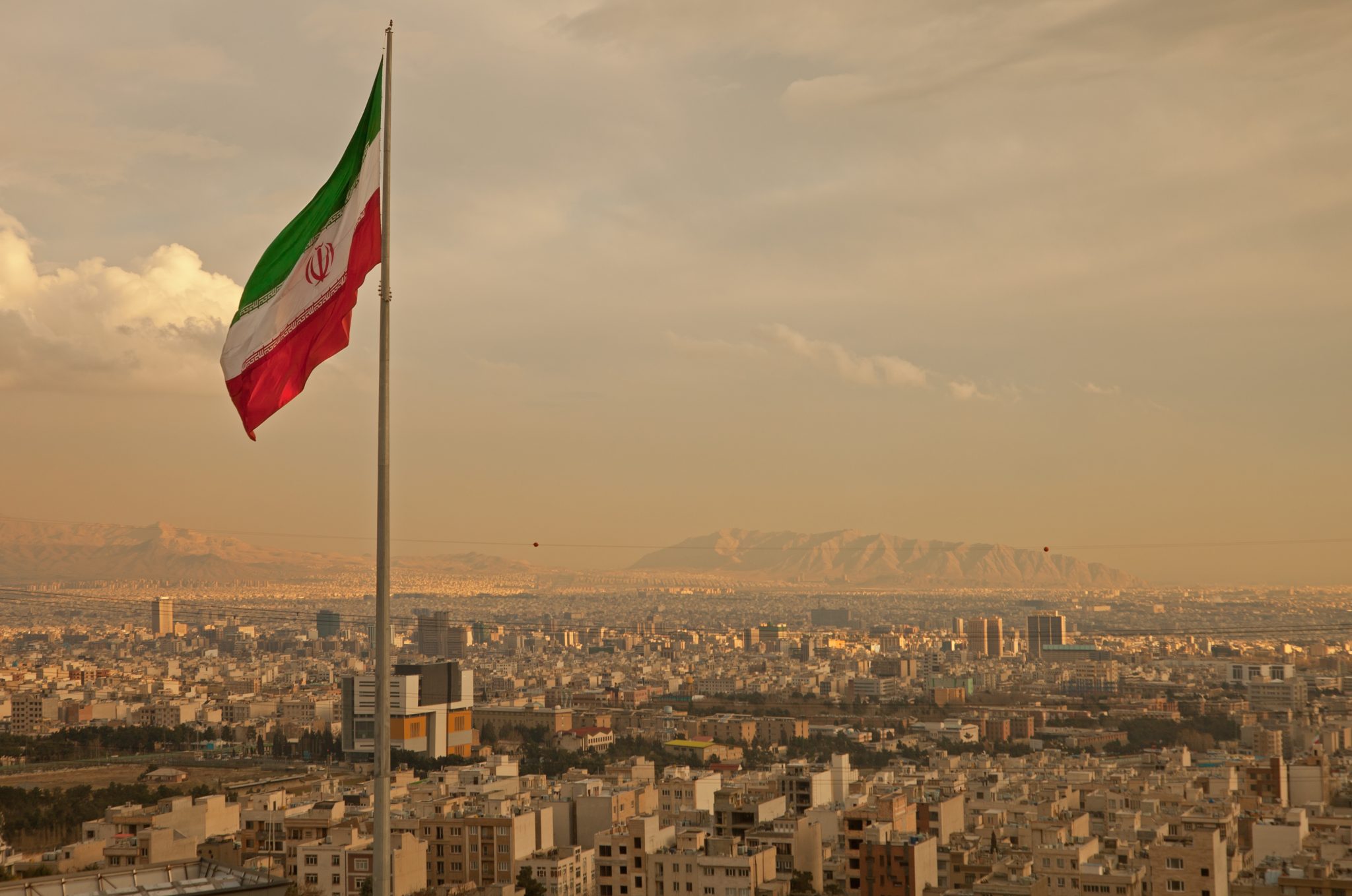
The truce declared this week between the US and the Islamic Republic after months of conflict appears likely to reopen the strait of Hormuz for the passage of ships, but little else appears certain. The agreement has put off the fate of Iran’s nuclear programme for further talks; there is no mention of Iran’s ballistic missile programme or its support for proxies like Hamas and Hezbollah. And Tehran’s brutal repression of its own people –more than 30,000 anti-regime protesters are reported to have been massacred in January alone – isn’t even an after-thought. Instead, the US has pledged not to “interfere” in Iran’s internal affairs – an apparent greenlight for further killing.
However, one thing is certain, that the Iran-Russia partnership – which was on full display during the war – will intensity to the detriment of both the Middle East and the west. As a new paper by LFI details, this anti-west axis has been long in the making. With Tehran and Moscow isolated from the global economy, both countries have been sharing best practises on sanctions evasion and formalised their partnership last year in a comprehensive 20-year agreement to accelerate cooperation, including on defence and security.
Iran’s drone threat – which has wreaked havoc across the Middle East, particularly against UK Gulf allies – was directly imported by Russia for its illegal invasion of Ukraine. With a view to helping Russia manufacture its own drones, Iran transferred 600 disassembled Shahed-16 drones, components for 1,300 further drones, as well as training and technical expertise, to Russia. With this blueprint, Russia developed the Garpiya-3, a modified and improved version of the Shahed, with the help of Chinese specialists. Russia has now launched tens of thousands of these drones at Ukraine, including firing 6,583 Shahed-type UAVs in April 2026 alone.
During Iran’s war with the US, Israel and the wider Middle East, Russia returned the favour. Moscow has assisted Tehran to manufacture more drones, more than 4,550 of which Iran has fired at its neighbours during the conflict. The Vice-President of the European Commission, Kaja Kallas, has noted that “Iranian drones used against our Gulf partners likely incorporate Russian tech upgrades” and the Shahed drone fired at the UK’s base in Cyprus was equipped with Russian technology to help evade detection. Most ominously, Russia has been Iran’s “eyes in the sky”, providing satellite imagery to enhance Iran’s targeting of regional US troops and assets. The Kremlin provided Tehran with intelligence about the locations and movements of American troops, ships and aircraft. Former defence secretary John Healey rightly pointed to Russia’s “hidden hand” during the war with Iran.
Russia and Iran are the UK’s primary national security threats, representing both a peer-to-peer military threat, and a sub-conflict “grey area” challenge, with both threatening domestic security through direct attacks on UK-based targets, radicalisation and misinformation campaigns, as well as the subversion of democratic institutions. Their malign statecraft and scope of battle include destabilising key western allies like the UK with a view to breaking apart the western alliance.
According to MI5, Britain is facing a “staggering rise” in attempts at assassination, sabotage and other crimes on UK soil by Russia and Iran, including through the use of criminal proxies and platforms such as Telegram to hire so-called disposable agents to carry out criminal acts. In addition to interfering in our elections and carrying out cyber-attacks, Iran is following Russia in perpetrating attacks on targets in the UK. Terrorist attacks – from the stabbings of Jewish men in Golders Green to the arson of Jewish communal ambulances – were reportedly orchestrated by an operative with close links to Iran. Iran and Russia are also abetting extremism in the UK, including through the support of far-right and Islamist extremists.
The Labour government has made clear its recognition of the threat posed by the Iran-Russia axis, announcing sanctions packages earlier this year as part of a “UK day of action” against destabilising activity by Iran and Russia. Recently introduced legislation to designate hostile state actors like the IRGC will have a real impact on Iran’s efforts at destabilisation. However, we have not applied the same systematic pressure on Tehran as we have on Moscow. For instance, the UK significantly accelerated its sanctions regime against Russia following its illegal invasion of Ukraine, with 3,300 targets now sanctioned and a total of £28.7bn in Russian assets frozen as of March 2026 – while the amount of Iranian assets seized by the UK as of September 2024 appears at most £19.3m. Equally, the UK has regularly expelled Russian diplomats in response to malign actions. However, the diplomatic blowback against Tehran has been far more limited
To counter this dual threat, improve our resilience and demonstrate our resolve, the UK government should firstly adopt the same, comprehensive sanctions regime against Iran as it has toward Russia. Secondly, we must identify and dismantle the soft influence networks in the UK which Tehran uses to advance its objectives under the cover of cultural, academic, charitable and media activity. Finally, and to demonstrate our firm resolve against the regime’s threats, the UK should, as it has with Russia, use every opportunity to isolate Iran through international institutions and bilateral diplomacy. This should include expelling Iran’s ambassador and other diplomats, as well as the supreme leader’s representative in the UK.
Iran and Russia are working to pull the western alliance apart through both conventional attacks against the UK and our allies, as well as through efforts to destabilise our institutions and society. We should be taking the same systematic approach we have taken against Iran as we have against Russia.