
Europe faces a critical and urgent defence readiness gap. The War in Ukraine has led to a necessary reckoning by European governments of their capacity to prepare for and respond to a range of security threats, while the conflict in the Gulf has underlined that we are destined to live in a more dangerous world. This prophecy of global turbulence stands in contrast to the warm glow from the end of the Cold War, some 35 years ago, when the benign international situation engendered a state of torpor in defence and finance ministries alike, as ‘guns’ were swapped for ‘butter’, and militaries cut to allow for unprecedented boosts in spending on social services.
This ‘peace dividend’ resulted in over two decades of cuts to our armed forces, including deprioritising necessary investments in additional aircraft carriers, fighter jets and other force projection capabilities, leaving in its wake a hollowed-out defence industrial base. As a result, incumbents in the UK and EU now struggle to both invest in large-scale projects that should have been developed years ago, in addition to funding the development of contemporary cutting-edge capabilities that make best use of those platforms, which require backing from government to scale and develop.
It is not enough to simply develop new, cutting-edge capabilities alone. Ministries must also now work at an unprecedented speed and scale to make sure that capabilities are both rapidly adaptable to consistently changing circumstances, as well as procured in numbers big enough to bring down unit costs to make them affordable if deployed effectively. These lessons are is vividly demonstrated in the Straits of Hormuz, where the Gulf States are using million-dollar interceptors to shoot down $15,000 Iranian Shahed drones, while in Ukraine drone software is having to be adapted on a weekly basis to combat jamming techniques and other innovations developed by Russian forces.
While the UK Government’s commitment to increased defence spending is to be unambiguously welcomed, it is clear that we will need plenty of private investment to match our increased public commitment to rearmament. We need asset owners to invest, fund managers to deploy, banks to lend, entrepreneurs to scale innovations, and companies to expand, hire and grow. The biggest issue to realising that vision, however, is a host of barriers that choke off the funding to firms across the UK vital to producing the capabilities we need to defend ourselves.
Through interviews as part of research for a recent report we co-authored on how to close Europe’s defence readiness gaps, we identified a range of impediments at both the funding, financing and company levels that get in the way of investment flowing to UK defence capabilities. These must be aligned with moves to strengthen European cooperation at both programme, defence ministry and industry levels, to maximise efficiency in the spending that we do dedicate to defence.
There are some areas where policymakers can take action immediately, the most obvious being to stop our public sector pensions from excluding investments in European defence companies as part of their instructions to the managers they appoint to manage their money. Evidence of such exclusions came through clearly in our interviews, but also through personal experience: as a former chair of a local government pension fund, lobbying was often intense from both pressure groups and even colleagues from other Boroughs to exclude defence-related companies from consideration for investment. In spite of the War in Ukraine, it is not unusual for defence investments to be equated with investing in tobacco or pornography, rather than assuming that the beneficiaries of our pension funds might prefer us to prioritise investment in our nation’s security. In some quarters, defence investment is now seen as delivering societal benefits that would align with placement in ESG portfolios, helping people have a safe, but also secure, retirement.
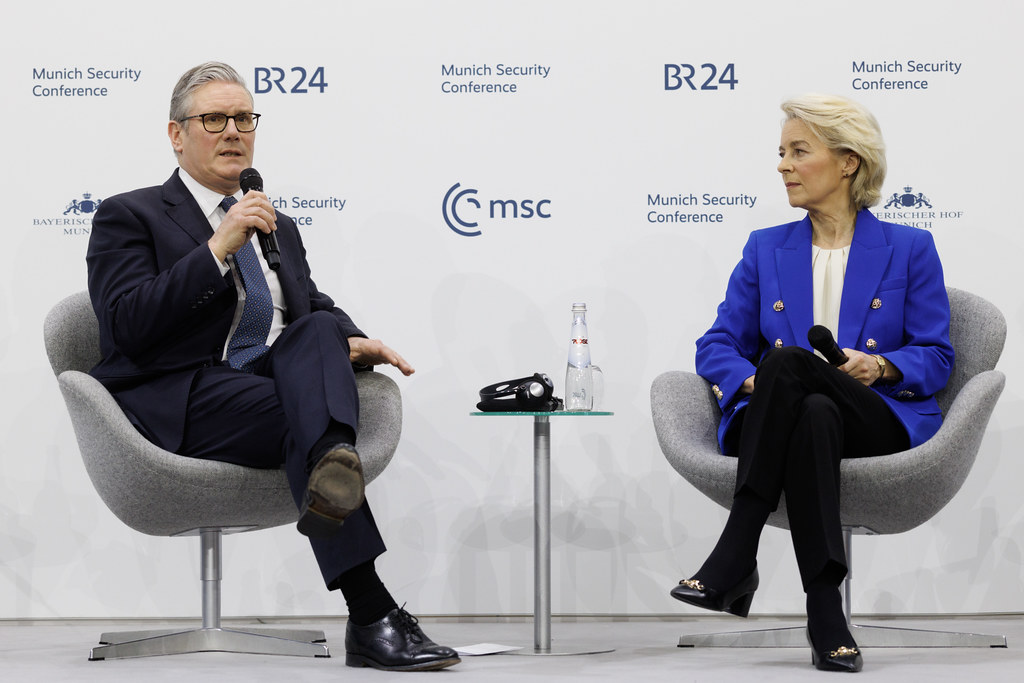
These exclusion policies identified in our research come in a few different forms and at both the fund level and as part of investment managers’ own policies. Individual pension committees and pension pools have a range of ESG and exclusion policies, while fund managers often ‘copy and paste’ exclusion policies from one investment prospectus to the next. A recurring theme from our research was the impact of investment exclusions for certain types of military equipment, with some policies insisting on only funding ‘defensive’ capabilities (despite the fact that deterrence often relies on the possibility of ‘offensive’ retaliation). Telling Ukraine, for example, that they could only develop counter-drone systems, rather than their own drone capabilities, would be considered insulting to those fighting Russian aggression, but we do not see it in the same way when investing in our own capabilities at home. The development of a new generation of hypersonic missiles was touted by European leaders at Munich Security Conference as vital to securing an effective deterrent to future Russian aggression in Europe, perhaps underpinning security guarantees needed to end the war in time. But such ‘offensive capabilities’ might be outlawed for investment by UK local government entities due to conceptual confusion and misplaced good intentions.
Other policies identified by our interviewees have precluded investment in manufacturers of ammunition, explosives and related products. The net effect of this is that companies which produce ammunition, energetics and related components – and particularly SMEs – are starved of the capital they need to grow, scale and support improved European readiness, and the UK often relies more on imports from overseas companies for these same capabilities, exacerbating critical supply chain vulnerabilities.
Relaxing these restrictions will provoke public debate, but will raise the salience of a critical issue where bold steps need to be taken. We urgently need to invest sharply more to align Europe’s defence capabilities with the nature of the threats it now faces. Without such action, Europe will remain ill-prepared for future conflicts. Whilst these restrictions have hitherto been couched in moral grounds, there is no greater moral imperative for governments than protecting their citizens from harm, and building the urgent and critical capabilities that can deter the aggression of others, both now and into an uncertain future.
Aidan Irwin-Singer is an Associate Director at the Milken Institute, and one of the co-authors of the recent report ‘Forging Partnerships to Accelerate European Defence Readiness’
Dr Simon Radford is Director for Policy at the Milken Institute, a co-author of the same report, and a local councillor in the London Borough of Barnet
Picture by Simon Dawson / No 10 Downing Street