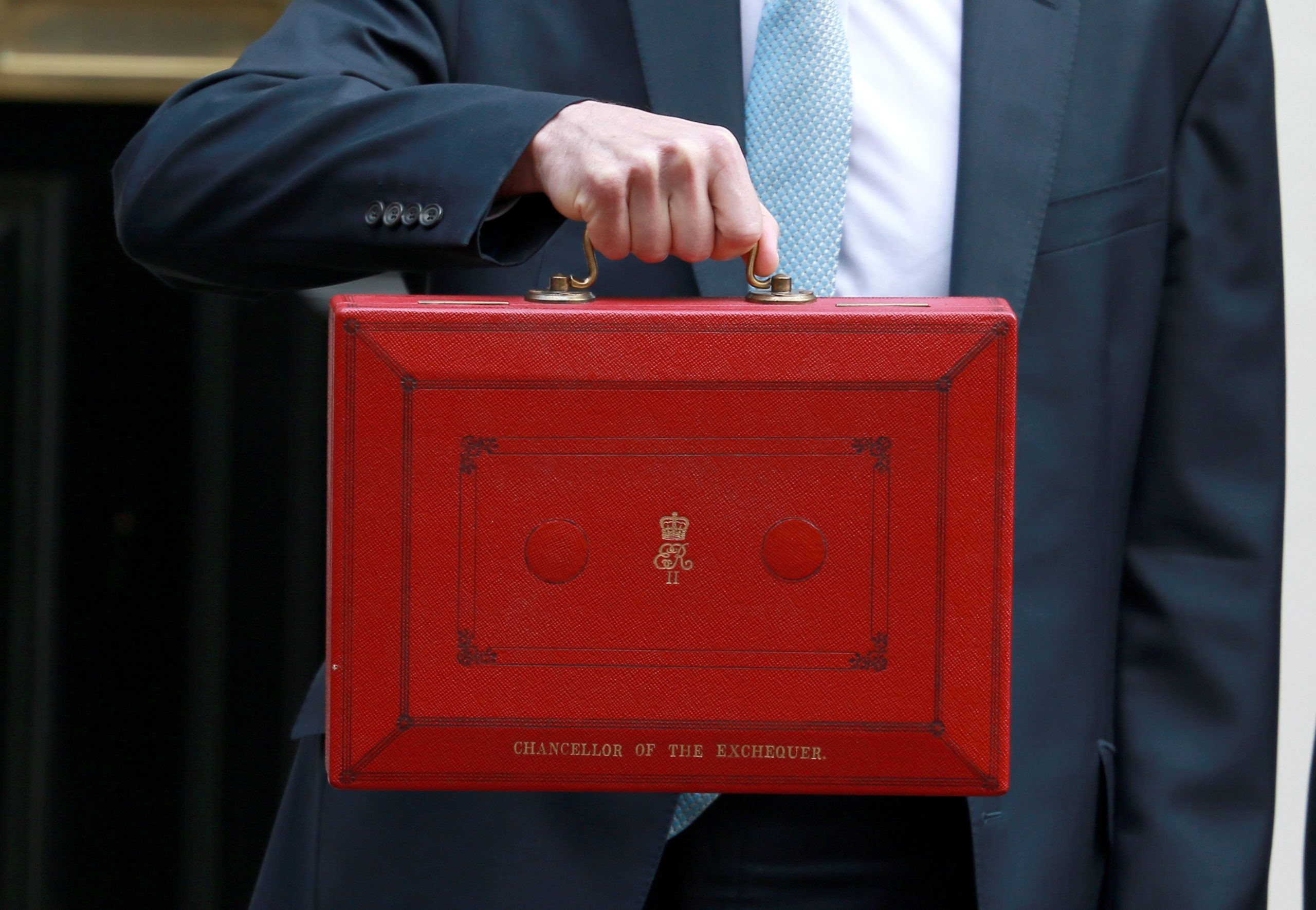


But there is a sea-change happening nevertheless. In-between the headline figures there was enough that John Healey’s first budget was music to my ears.
The Chancellor signalled regime change, one with potentially far-reaching consequences, over one of the country’s biggest challenges: energy.
If the National Care Service is Andy Burnham’s top priority, energy should be next on the list. The Chancellor said it himself: higher energy prices don’t just hit businesses and households, they raise inflation and interest rates across the economy. They are poisoning the economic lifeblood of our country. Without cutting energy prices drastically there can be no reindustrialisation, no growth in every postcode, nor any progress on our climate ambitions. Driving down electricity prices is the closest thing we have to a silver bullet for Britain’s problems.
So it was significant that the Chancellor signalled regime change in three ways.
First, he declared victory over Clean Power 2030, Ed Miliband’s signature policy, and marked a shift to Cheaper Power 2030. Second, he said the Treasury would exercise more oversight over costs that had been lumped onto bills by preceding energy secretaries. Third, he signalled frustration that Britain’s energy infrastructure build was not keeping pace with its ambitions.
Let’s go through each in turn..
The Chancellor stated: “The government has made substantial progress on clean power. The focus now is to unleash cheap electricity, cutting bills to reindustrialise the country.”
That’s a notable shift in priorities. Under Ed Miliband, DESNZ focused on Clean Power 2030 goals even if they raised bills in the short term. Numerous energy experts have said that having 95% of our power being supplied by renewables, Ed Miliband’s target, would raise costs too much. Yet DESNZ stuck to its target anyway, which now looks unachievable, because grid connections have been delayed.
The Tony Blair Institute was quick to declare victory afterwards. DESNZ ministers were quick to push back. Both have a point. The Chancellor didn’t repudiate the clean power goal, rather, he pointed out that we have enough renewable energy projects in the pipeline, and the Iran war necessitated a shift in priorities. “If there’s someone to credit, it should be Mark McVitie, author of ‘An Honest Day’ from the Labour Growth Group, who urged Labour to grapple with rising electricity costs. The Chancellor was right to declare victory and move on.
The Budget also stated: “[N]o new policy costs will be put on bills until a comprehensive Cost Control Framework is in place at the spending review in 2027, which will set budgets for components of energy costs, including policy costs.”
In other words, the tendency for energy secretaries to fund new schemes from bills has gone too far. It’s time for the Treasury to step in. Although Claire Coutinho MP has a new-found love for cutting energy bills, as Conservative energy secretary she lumped huge costs on energy bills, including nearly £25 billion for experimental hydrogen and carbon capture schemes. These should be axed, along with other costs. Treasury oversight here should be welcome, providing it doesn’t paralyse every decision henceforth.
A follow-up tweet by Treasury minister Dan Tomlinson confirmed that hydrogen projects will be junked, and they’re looking at ways to cut spending on carbon capture. They will also be more stringent with upcoming renewables auctions (AR8 + AR9).
And finally, there was this: “Prioritising a cheaper energy mix and procuring new generation only where it lowers bills, benefits the system, and can be accommodated by the grid.”
If you haven’t heard yet – we are paying up to £50 million a day, extra, just to turn off wind turbines in Scotland and turn on gas turbines near London, because we have not yet built the grid lines to transport that power. How the energy system got into this mess is a topic for another day, but such a stance has been a long time coming and is deeply welcome. We need a whole systems approach to driving down bills and Treasury scrutiny should help here.
But the fundamental issue is that Britain’s energy markets need modernisation: electricity prices are high because companies at every layer of the system, including renewable developers, are making good money. Renewable energy can be far cheaper than fossil fuels and nuclear power, but DESNZ has so far been unsuccessful in making that happen. They face strong lobbying from the incumbents.
Dan Tomlinson MP also said this at the end: “Unless we make electricity cheaper relative to other energy sources, we will struggle to increase adoption of EV and heat pumps.”
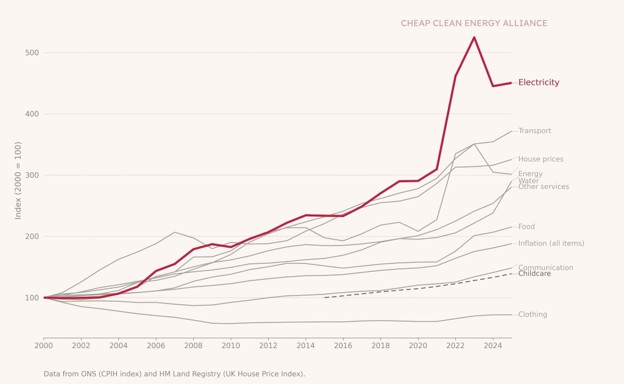
This is worth emphasising. The solution to the cost-of-living crisis as well as the climate crisis – is cheaper, cleaner electricity. Except, over the past 20 years electricity prices in Britain have risen faster than any other major household expense. And they are expected to keep rising due to costs that are still due to be put on bills. This is why I created the Cheap Clean Energy Alliance; we need urgent reform and modernisation to reverse this trend.
And this is why it’s essential Andy Burnham focuses on energy too. Government coordination across departments – from transport and environment to DESNZ, infrastructure and the Treasury – will be necessary to drive bills down. The Treasury’s spreadsheet approach has limits. While John Healey signalled that he’s trying to get to grips with it, to really drive change we need his boss to get involved too.